Skip to main content
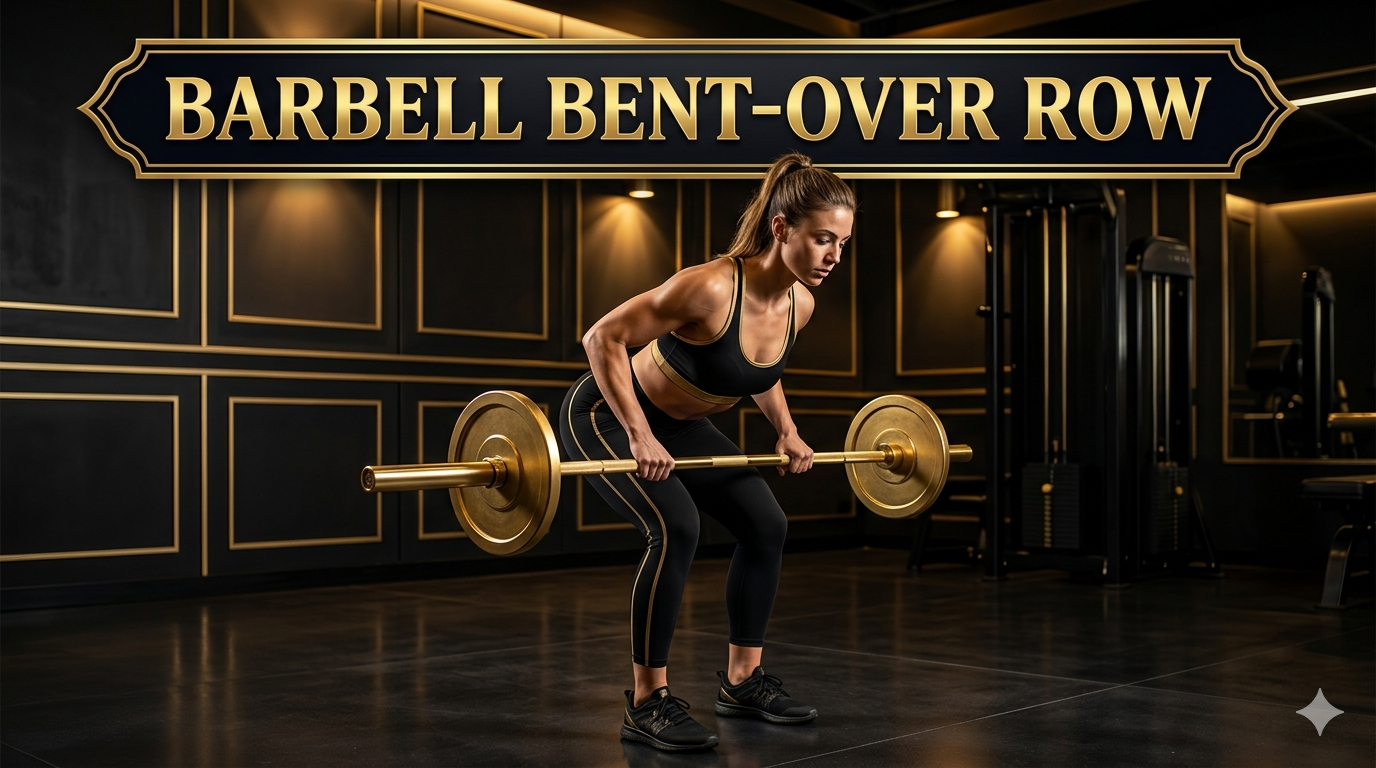
Ultimate Upper Back Builder: The barbell bent-over row is a powerhouse compound exercise that mainly targets your latissimus dorsi (lats), rhomboids, rear delts, and traps to build a thick, strong back. Core and Lower Back Stability: Because you are holding a hinged, bent-over position against gravity, it heavily engages your lower back, glutes, and core to keep your body stable. Posture Corrector: Regularly performing this movement helps pull your shoulders back, balancing out heavy chest training and fixing the rounded-shoulder posture caused by sitting at desks. Form is Everything: To do it safely, you need to hinge at your hips, keep your spine perfectly straight (no rounding your back), and pull the barbell toward your lower stomach by driving your elbows up. Grip Versatility: Changing your hand position alters the focus; an overhand grip emphasizes your upper back and rear shoulders, while an underhand (supinated) grip brings in more bicep involvement and lower activation.
Latissimus Dorsi (Lats)
Rhomboids
Trapezius Rear
Deltoids Biceps
Forearms
Core Muscles
Lower Back
Stand with your feet shoulder-width apart. Hold a barbell with an overhand grip slightly wider than shoulder width. Bend at your hips until your torso is about 45–60 degrees to the floor. Keep your back straight, chest up, and core engaged. Pull the barbell toward your lower chest or upper abdomen. Squeeze your shoulder blades together at the top. Slowly lower the barbell back to the starting position. Repeat for the desired number of repetitions
Builds a stronger and thicker back. Improves posture by strengthening the upper back muscles. Increases pulling power for sports and daily activities. Enhances grip and forearm strength. Engages the core for better stability. Supports muscle growth and overall upper-body development. Improves performance in deadlifts, pull-ups, and other compound exercises.
Rounding the lower back.
Using excessive body momentum.
Pulling the bar too high toward the neck.
Standing too upright during the movement.
Lifting weights that are too heavy to control.
Not completing the full range of motion.