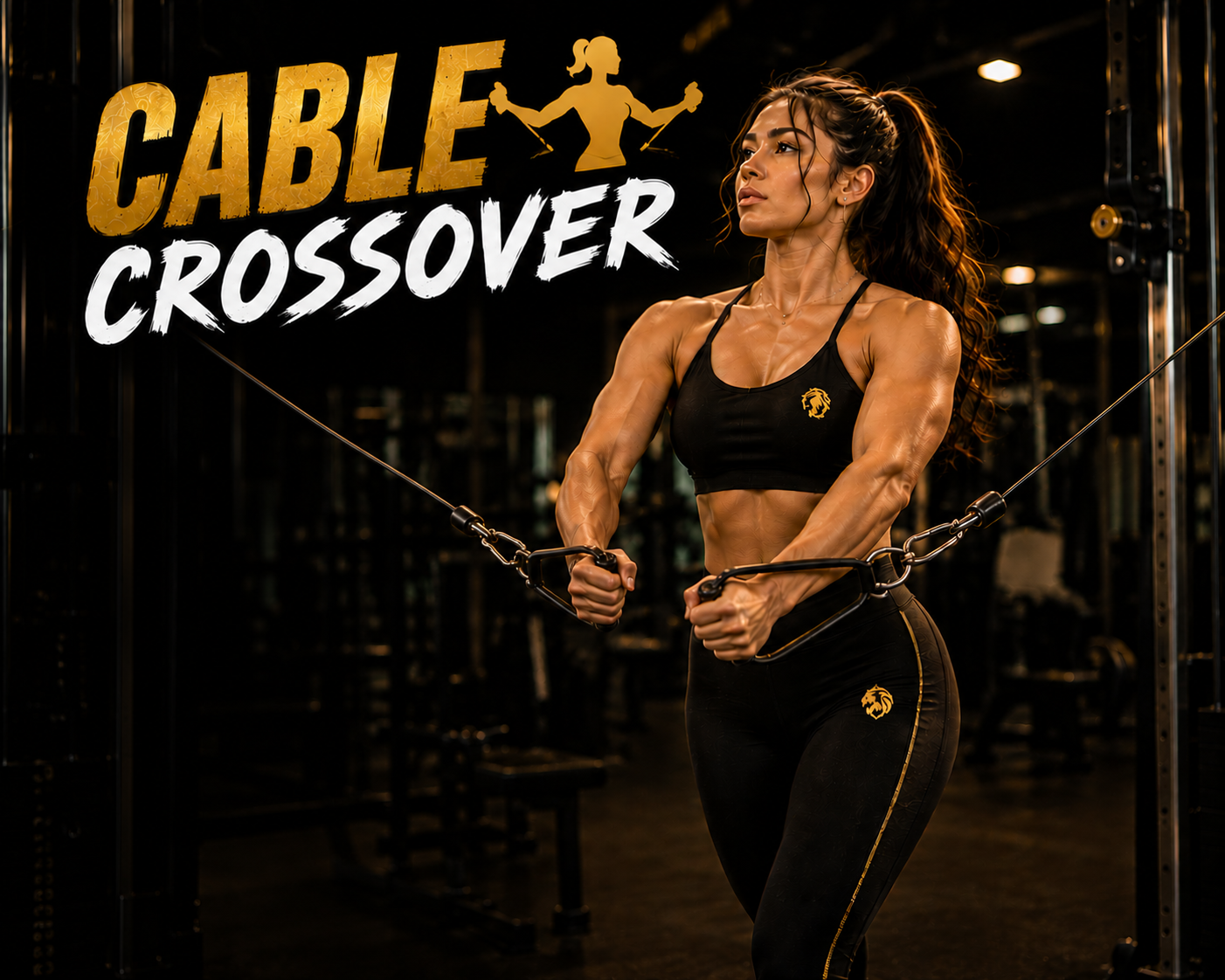
Cable Crossover is an excellent isolation exercise for developing chest muscles. It provides constant tension throughout the movement for better muscle activation. This exercise helps improve chest definition and creates a fuller appearance. Keep a slight bend in your elbows and focus on squeezing the chest at the end of each rep. Regular Cable Crossovers can enhance muscle symmetry, strength, and overall chest development.
What Is a Cable Crossover?
Cable crossover is an isolation exercise that targets the chest muscles using a cable machine. It involves bringing the handles together in front of your body in a wide, controlled arc. This exercise provides constant tension throughout the movement, helping to improve chest definition, muscle growth, and overall upper-body strength. It is suitable for beginners and experienced gym-goers alike.
Benefits of Cable Crossover
Cable crossovers help build a well-defined and balanced chest by isolating the pectoral muscles. The constant resistance from the cables increases muscle activation and improves strength. This exercise also enhances shoulder stability, supports better muscle symmetry, and allows a full range of motion for maximum chest contraction. It is an excellent finishing exercise for chest workouts.
How to Perform Cable Crossover Correctly
Stand between two cable pulleys with the handles set slightly above shoulder height. Hold one handle in each hand and step forward into a stable stance. Keep a slight bend in your elbows and bring the handles together in front of your chest. Squeeze your chest muscles at the end of the movement, then slowly return to the starting position. Maintain controlled movements and avoid using momentum.
Muscles Worked in Cable Crossover
Cable crossover primarily targets the pectoralis major (chest). It also engages the anterior deltoids (front shoulders) and biceps as stabilizing muscles. The core muscles work to maintain balance throughout the exercise. By adjusting the cable height, you can emphasize the upper, middle, or lower chest.
Tips and Common Mistakes
Use a weight that allows you to maintain proper form without swinging your body. Keep your elbows slightly bent throughout the movement to reduce joint stress. Avoid locking your elbows or letting the weights slam together. Focus on squeezing your chest at the peak of each repetition and perform the exercise with slow, controlled movements for the best results.
 Skip to main content