What Is the Incline Dumbbell Press?
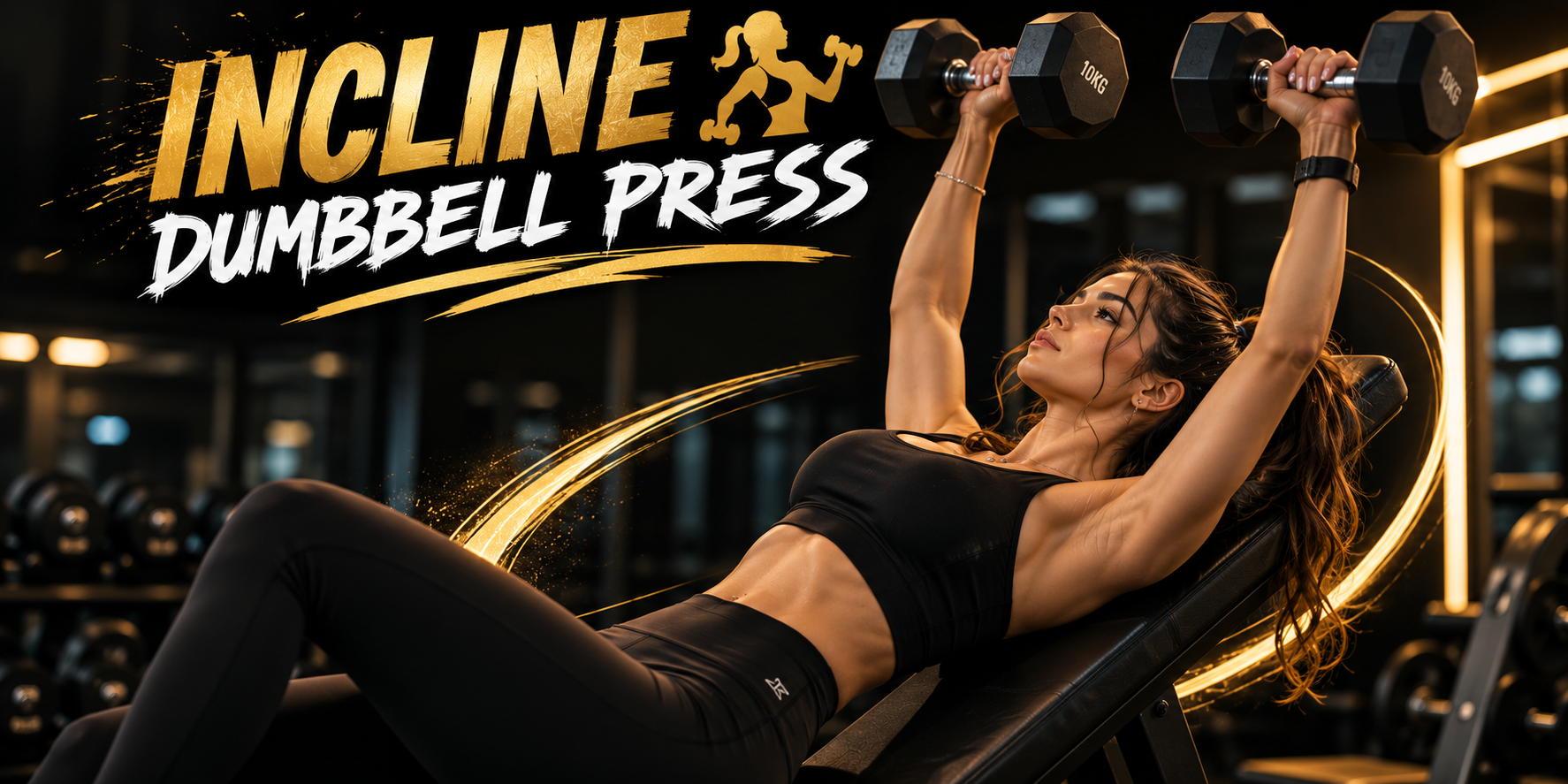
The incline dumbbell press is a compound upper-body exercise performed on an incline bench, usually set between 30 and 45 degrees. It primarily targets the upper chest while also strengthening the shoulders and triceps. Using dumbbells allows each arm to move independently, improving muscle balance, coordination, and range of motion. It is an excellent exercise for building a fuller, stronger chest.
Benefits of the Incline Dumbbell Press
The incline dumbbell press helps develop the upper portion of the chest, creating a more balanced and defined appearance. It improves upper-body strength, enhances shoulder stability, and promotes equal muscle development on both sides of the body. The exercise also provides a greater range of motion than a barbell press, leading to better muscle activation and growth.
How to Perform the Incline Dumbbell Press Correctly
Adjust the bench to a 30–45 degree incline and sit with a dumbbell in each hand. Press the dumbbells above your chest with your palms facing forward. Slowly lower the weights until your elbows are slightly below the level of the bench while keeping your wrists straight. Push the dumbbells back to the starting position, squeezing your chest at the top. Perform each repetition with controlled movement and proper breathing.
Muscles Worked in the Incline Dumbbell Press
The incline dumbbell press mainly targets the upper pectoralis major (upper chest). It also works the anterior deltoids (front shoulders) and triceps brachii. In addition, the forearms and core muscles help stabilize the weights throughout the exercise, improving overall strength and control.
Tips and Common Mistakes
Choose a weight that allows you to maintain proper form throughout the set. Avoid arching your lower back or lifting your feet off the floor. Keep your elbows at about a 45-degree angle to reduce shoulder stress. Do not let the dumbbells bounce at the bottom of the movement, and avoid rushing through repetitions. Focus on slow, controlled movements to maximize muscle activation and reduce the risk of injury.
 Skip to main content


wzzhlfogtkguhddokvplqttszmtyps