Skip to main content
Constant Tension on Lats: Unlike free weights where the angle of gravity shifts the load, the cable system maintains continuous, uniform resistance on your lats and mid-back throughout both the stretching and pulling phases. Maximum Scapular Retraction: Sitting down stabilizes your lower body, allowing you to focus entirely on squeezing your shoulder blades together to build serious thickness in your rhomboids and middle traps. Customizable Attachments: You can easily swap out the handles—using a close-grip V-bar for lower lat thickness, a wide bar for upper back width, or independent ropes for a deeper range of motion. Controlled Stretch Phase: The exercise allows you to safely let your arms and shoulders be pulled forward at the start of each repetition, giving the back muscles a deep, muscle-growing stretch under control. Lower Injury Risk: Because your torso remains relatively static and the weight path is guided by a pulley, it places significantly less shearing stress on your lower back compared to standing barbell rows.
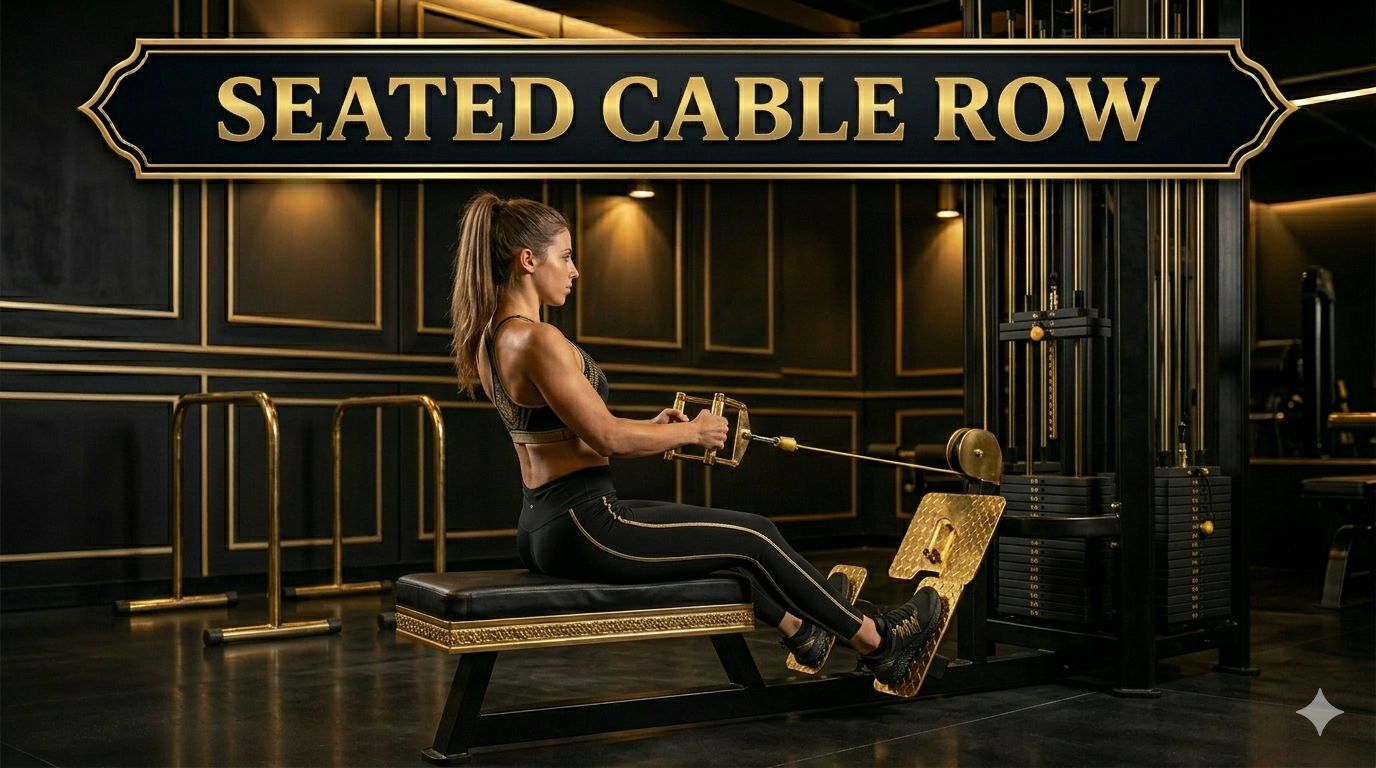
The Seated Cable Row is one of the best exercises for building a strong, well-defined back. It targets the latissimus dorsi, rhomboids, trapezius, and biceps while improving posture and upper-body strength. Regular practice also enhances shoulder stability and supports better performance in other pulling exercises.
Sit on the machine with your feet firmly on the platform and grasp the handle with both hands. Keep your back straight, chest up, and shoulders relaxed. Pull the handle toward your lower chest while squeezing your shoulder blades together. Slowly extend your arms to return to the starting position without losing control.
The Seated Cable Row primarily works the latissimus dorsi (lats), rhomboids, middle trapezius, and rear deltoids. It also engages the biceps, forearms, and core muscles to maintain balance and stability throughout the movement.
Avoid rounding your back, using excessive body momentum, or pulling the handle too high. Do not let your shoulders roll forward during the movement. Focus on slow, controlled repetitions and maintain proper posture to maximize muscle engagement and reduce the risk of injury.
Use a weight that allows you to perform each repetition with proper form. Keep your chest lifted, squeeze your shoulder blades at the end of each pull, and control the return movement. Train consistently, increase the weight gradually, and combine the exercise with a balanced nutrition plan for the best strength and muscle-building results.